Completion Day: What Actually Happens When You Sell Your Business?
For most business owners, completion day is the moment they’ve been working toward for months. In some cases, years.
After all the conversations, the due diligence, the legal back and forth, the late nights wondering whether it will actually get over the line — completion day is when it finally becomes real.
And yet, for many sellers, the day itself comes as a surprise. Not because anything goes wrong, but because it looks nothing like they imagined.
This guide explains exactly what happens on completion day when you sell a business in the UK — the practical steps, the paperwork, the timing, and the emotional reality that nobody tends to warn you about.
What Completion Day Actually Looks Like
The first thing to understand is that completion day in a modern business sale is almost entirely virtual.
There is no signing ceremony. No meeting around a table. No moment where you hand over the keys and shake hands while a photographer captures the occasion.
What actually happens is a series of quiet, administrative steps coordinated between two sets of lawyers — yours and the buyer’s — that together transfer legal ownership of your business from you to them.
Completion day is rarely dramatic. But it is the moment everything changes.
The Five Steps of Completion Day
Step 1: Documents Prepared
In the days leading up to completion, both sets of lawyers prepare the completion documents. In a share sale, there are typically fifteen to twenty separate documents that need to be signed, including:
- Director resignation letters from the outgoing directors
- New director appointment documents
- Board minutes approving the transaction
- Stock transfer forms transferring the shares
- Share certificates
- Companies House filing forms
- Any ancillary agreements — service agreements, consultancy agreements, non-compete confirmations
Your lawyer will have everything prepared and ready to go before completion day itself. The goal is that on the day, everything is in order and the signing process is straightforward.
Step 2: Electronic Signing
Documents are now signed electronically in almost all cases, using platforms like DocuSign. Both sides — buyer and seller — receive the documents digitally, sign where required, and the platform confirms when everything has been executed.
This means you can complete the sale from anywhere. You don’t need to be in a lawyer’s office or even in the same city as the buyer. Many sellers complete the sale of their business while sitting at their kitchen table.
The days of completion meetings and signing ceremonies are largely gone. Modern business sales complete remotely, which makes the process faster and more straightforward for everyone.
Step 3: Funds Transferred
Once the signing is confirmed, the buyer’s lawyer releases the funds. The initial consideration — the amount being paid on completion day — is transferred into your lawyer’s client account.
Your lawyer will confirm receipt and then transfer those funds to you, minus their fees and any other deductions that have been agreed. Depending on your bank, the money may clear the same day or the following working day.
Any deferred consideration — the portion of the price being paid over time — will follow according to the payment schedule set out in the sale agreement.
Step 4: Completion Confirmed
Once documents are signed and funds are confirmed, both sets of lawyers speak by phone to formally confirm that completion has taken place. This phone call is the legal moment at which ownership transfers.
Your lawyer will call you to confirm. And at that point — often with very little fanfare — the business you have spent years building belongs to someone else.
Step 5: Companies House Filing
In the days immediately following completion, your lawyer files the necessary documents at Companies House. This updates the public record to reflect the new ownership — the change of directors, the transfer of shares, and any other relevant changes.
From this point, the buyer is the legal owner of the business in every sense.
Simultaneous Exchange and Completion
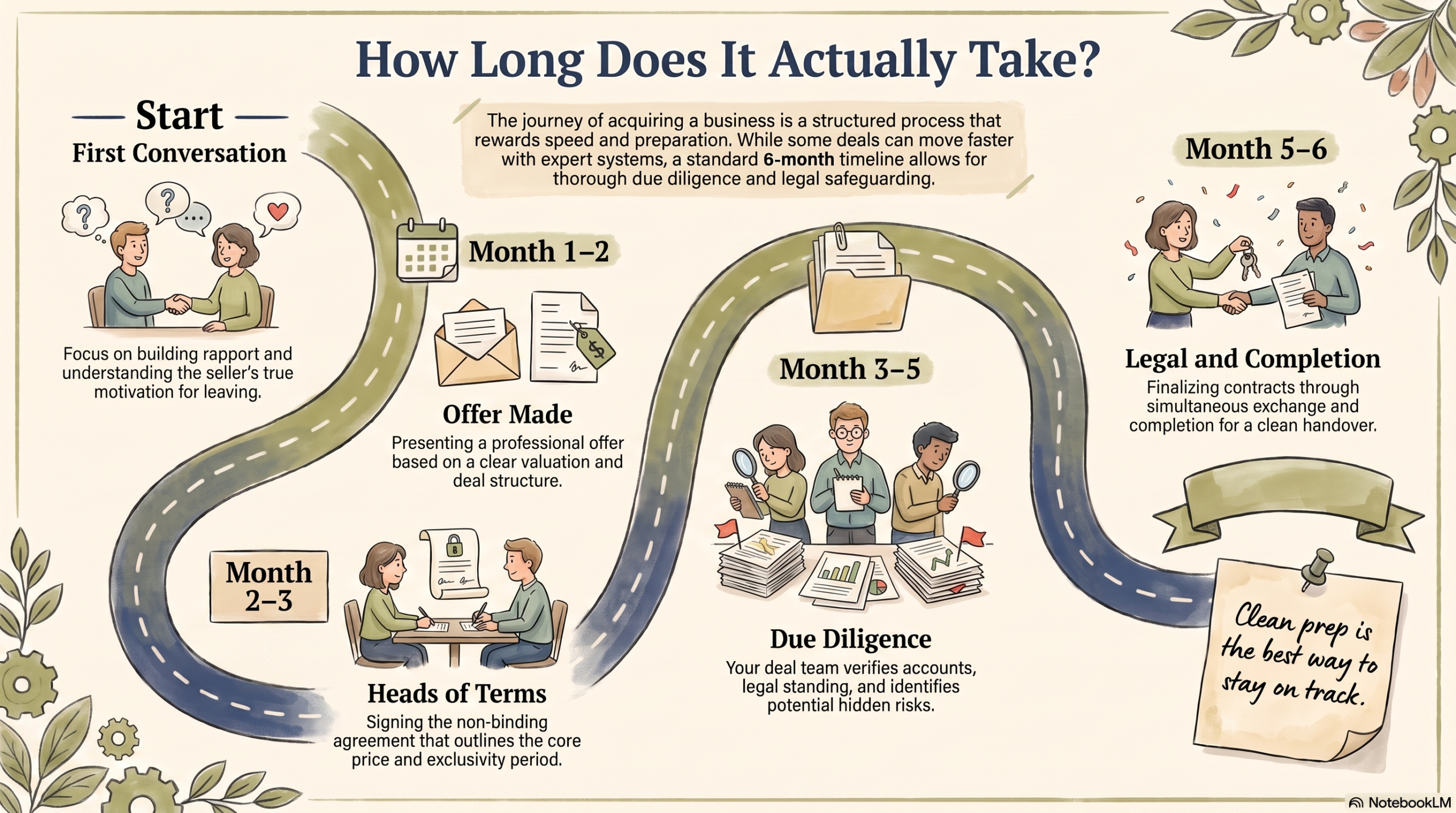
In almost all modern business sales — around 95% — exchange of contracts and completion happen on the same day. This is called simultaneous exchange and completion.
The alternative — exchanging contracts and then completing a few weeks later — used to be more common but is now relatively rare. The reason most deals go simultaneous is that it’s cleaner and faster. There’s no period where contracts are exchanged but the business hasn’t yet changed hands, which creates complications around how the seller manages the business in the interim.
What Happens in the Days and Weeks After Completion
Completion day is the end of the sale process. But it’s also the beginning of the transition.
The handover period
Most sellers agree to a handover period as part of the deal — a defined period of time during which they remain available to help the buyer get to grips with the business. This might be a few days a week for a month or two, or a more structured arrangement over a longer period.
The handover covers everything from introducing key clients and staff to the practical details of how the business operates day to day — systems, supplier relationships, recurring processes, passwords, and anything else the buyer needs to run things smoothly from day one.
Telling staff and clients
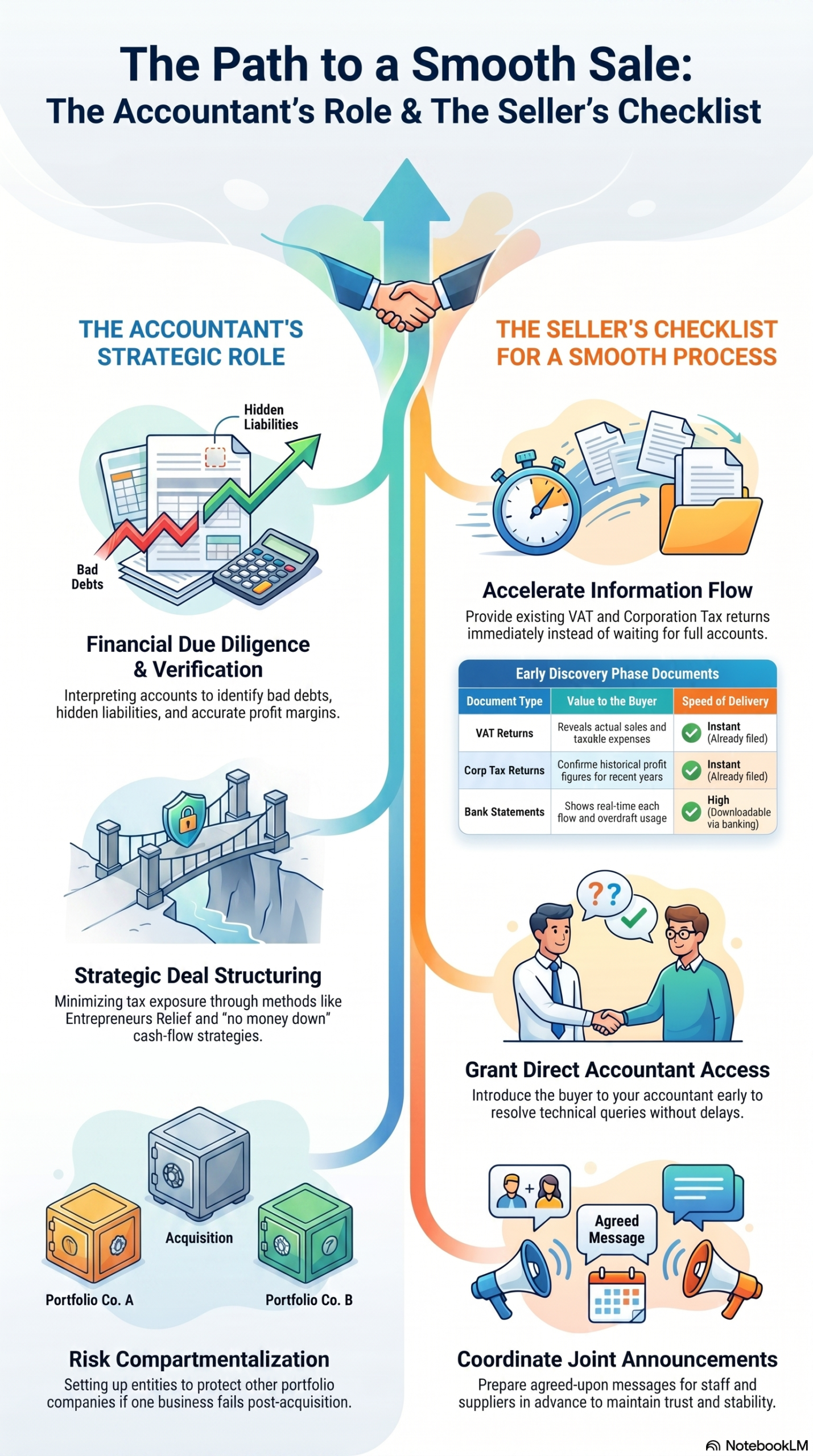
In most sales, staff and clients are informed immediately after completion — not before. The timing and wording of these announcements will usually have been agreed between buyer and seller during the sale process, so there’s a clear plan in place for who is told what and when.
This is one of the most sensitive parts of the transition. Handled well, it gives everyone confidence in the continuity of the business. Handled badly, it creates uncertainty and can damage relationships that took years to build.
The tax return
Your accountant will handle the tax return that reports the sale and calculates any Capital Gains Tax due. If Business Asset Disposal Relief applies — which it does for most qualifying business owners — the rate is 10% on the gain. Your accountant will have made sure you’re set up to qualify well before completion day.
The Emotional Reality of Completion Day
This is the part that most guides leave out. But it’s worth talking about, because it catches a lot of sellers off guard.
Most business owners imagine completion day will feel like a celebration. And in some ways it does. There is real relief when it’s done — relief that the process is over, that the deal held together, that the money is on its way.
But many sellers also describe a strong sense of anticlimax. After months of intense activity — due diligence, legal negotiations, endless emails — completion day itself is remarkably quiet. A few notifications on your phone. A call from your lawyer. And then silence.
And then, often in the days that follow, something that nobody warned them about: a feeling of loss.
Selling a business you have built is not just a financial transaction. It is the end of something that has defined a significant part of your life. It is entirely normal to feel that.
The identity question is real. For many owner-managers, the business has been central to who they are — how they spend their time, how they see themselves, how other people see them. When that goes, even voluntarily and on good terms, there is an adjustment period.
This is worth thinking about well before completion day. What does life after the business look like? What will you do with your time? Who will you be when you’re no longer the owner of that company?
The sellers who navigate the post-sale period best are the ones who have thought about these questions in advance — not the ones who assumed the money would answer them.
Practical Checklist for Completion Day
Here is what to have in place before completion day arrives:
- Confirm bank details with your lawyer well in advance — fraud involving misdirected payments is a known risk and lawyers take this seriously
- Make sure your ID and any other verification documents your lawyer needs are provided promptly
- Have a plan for the handover period — know what you’re doing in the days and weeks immediately after completion
- Agree the staff and client announcement plan with the buyer before completion day
- Brief your accountant so they are ready to handle the tax return promptly
- Know where the deferred payments are coming from and when — make sure the payment schedule is clear
- Have something planned for completion day itself — even something small. It is a significant moment and it deserves to be marked
Final Thoughts
Completion day marks the end of one of the most significant processes most business owners will ever go through. It deserves to be understood properly — both practically and emotionally.
The practical side is straightforward once you know what to expect. Documents, signatures, a phone call, a transfer of funds. Clean, efficient, and largely handled by your lawyers.
The emotional side takes a little more preparation. Give yourself permission to feel whatever you feel on the day. And make sure you’ve thought about what comes next — because that’s where the next chapter begins.
At Hazel Property Group, we guide sellers through every stage of the process — including the parts nobody else talks about. If you’d like a private, no obligation conversation about selling your business, get in touch at hazelpropertygroup.co.uk.
Further Reading
If you found this guide useful, you might also want to read:
- What Actually Happens When You Sell Your Business? A Step-by-Step Guide
- What Are Heads of Terms?
- What Does Due Diligence Involve?
- How Long Does It Take to Sell a Business?
Or watch the full Process Series on the Hazel Property Group YouTube channel — every stage of selling your business explained in plain English.
Search Hazel Property Group on YouTube or visit hazelpropertygroup.co.uk