Most business owners underestimate how long a sale takes. They assume a few weeks of negotiation, some paperwork, and it’s done. The reality is usually four to six months — and that’s when everything goes smoothly.
Understanding the timeline before you start means you can plan properly, keep running the business during the process, and avoid making decisions based on a completion date that isn’t guaranteed.
Here’s what the journey actually looks like from the seller’s point of view.
The First Conversation — Week One
Everything starts with a phone call. A good buyer will want to understand what the business does, why you’re thinking of selling, and roughly what the numbers look like. This is not an interrogation — it’s a conversation to find out if there’s a fit worth exploring further.
You don’t need to share everything at this stage. Know your revenue and approximate profit. Have a clear reason for selling. And ask questions back — a buyer worth talking to will welcome them.
If the call goes well, both sides will agree to take things further.
The First Meeting — Weeks Two to Four
The first face to face meeting usually happens within a few weeks of the initial call. This is where the buyer starts to form a proper view of the business — and of you.
They’re assessing three things: whether they trust you, whether the numbers stack up, and whether there’s something genuinely worth buying. Be honest about the challenges. Buyers find out everything eventually, and sellers who volunteer the difficult stuff early build far more credibility than those who don’t.
Come prepared with three years of accounts or at least a clear picture of the headline numbers. You don’t need a lawyer or accountant at this stage — this is still a conversation, not a negotiation.
The Offer — Month One to Two
If the meeting goes well, the buyer will come back with an offer. This isn’t the final price — it’s an indication of what they’re willing to pay based on what they know so far.
The offer will usually outline the headline price, the proposed deal structure (how much upfront, whether there’s any deferred element), and the key conditions. This is the point where it starts to feel real.
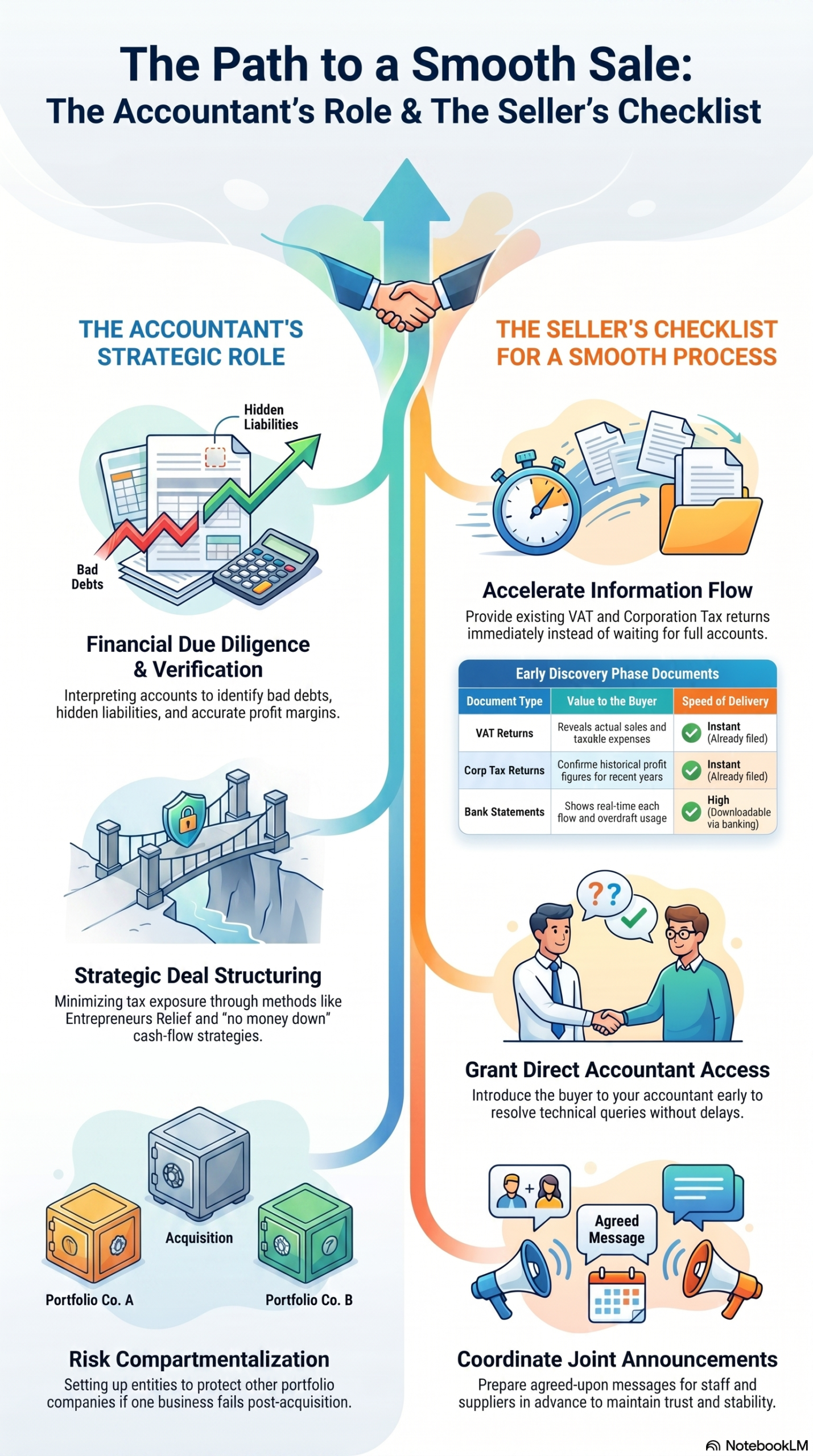
Take your time with it. Don’t feel rushed into responding immediately. Talk it through with your accountant — the structure of a deal can make a significant difference to how much you actually take home.
Heads of Terms — Month Two to Three
Once both sides have agreed on the broad shape of the deal, a Heads of Terms document is drawn up. This captures the price, the deal structure, the exclusivity period, and the key conditions before the legal process begins.
Heads of Terms is not fully legally binding — but it is a serious commitment. Read it carefully. Make sure the numbers match what you discussed. Make sure you understand the exclusivity period — this is the window during which you agree not to talk to other buyers while due diligence and legal work proceeds.
Everything that follows is built on this document.
Due Diligence — Month Three to Five
Due diligence is the buyer checking that everything you’ve told them is true. They’ll go through your financials, contracts, customer relationships, leases, employment agreements, tax records — all of it.
It can feel intrusive. It’s meant to. This is the stage where most deals run into problems, and almost always because something unexpected surfaces that wasn’t mentioned earlier. The sellers who find due diligence easiest are the ones who went into it with clean records and nothing to hide.
Prepare early. Have three years of accounts readily available. Know where your key contracts are. Understand your staff arrangements. The more organised you are, the faster this stage moves — and speed matters, because deals that stall in due diligence often die.
Legal Process — Month Four to Six
While due diligence is happening, the lawyers are drafting and negotiating the Sale and Purchase Agreement. This is the binding contract that sets out exactly what is being sold, what warranties you’re giving as the seller, and how completion will work.
Use a specialist commercial lawyer who has done business sales before. A generalist will slow things down and cost you more in the long run.
This stage typically runs alongside the later part of due diligence. Both sides’ lawyers go back and forth on the wording — this takes longer than most sellers expect. Stay responsive. Answer queries quickly. Deals that stall at this stage because the seller goes quiet often fall apart.
Completion Day — Month Five to Six
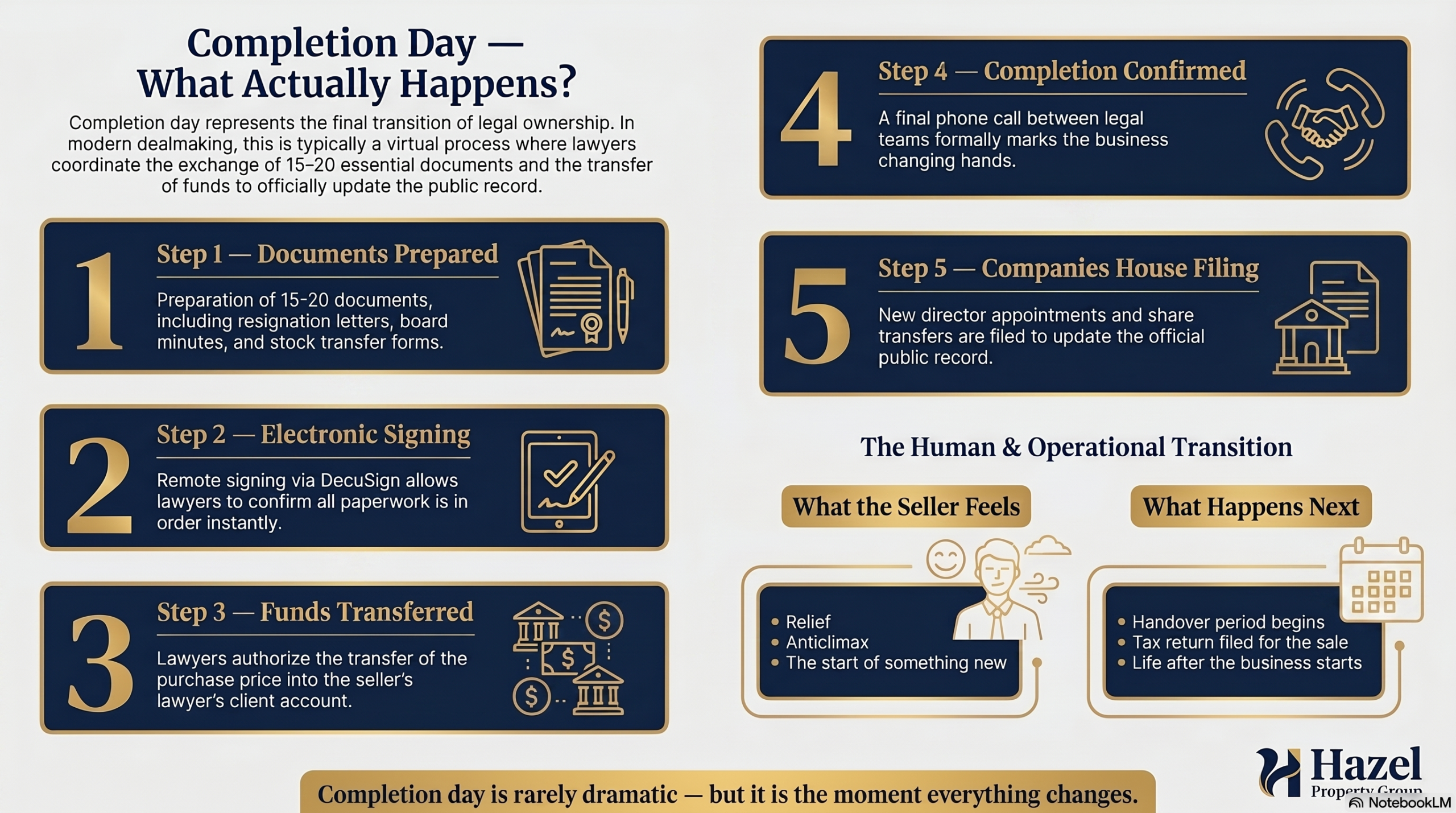
Completion is quieter than most sellers expect. There’s no ceremony, no boardroom handshake. The lawyers confirm everything is in order, the funds transfer electronically, and ownership moves across.
Most sellers describe it as a phone call to say it’s done.
Have your communication plan ready before completion day arrives — staff, customers, and key suppliers all need a message, and that message should be agreed with your buyer in advance. Work with the buyer on the announcement. A good buyer wants to keep your team and your customer relationships intact.
What Pushes the Timeline Out
A straightforward deal takes four to six months. Poor preparation pushes that to twelve. The most common reasons deals take longer than expected are:
Messy financial records that take time to work through. Contracts that aren’t in place or haven’t been signed. Unexpected issues surfacing in due diligence that need to be resolved. Slow responses from either side’s lawyers. A seller who goes quiet or becomes hard to reach during the process.
Clean records, organised paperwork, and quick responses keep things moving. Plan for six months — and don’t plan around a specific completion date unless it’s in writing.
A Word On What Comes After
The timeline doesn’t end on completion day. Most deals include a handover period where the seller stays involved to transition relationships and knowledge to the buyer. This is in everyone’s interest — the buyer needs to understand the business, and the seller has a responsibility to make the handover work.
Plan for what life looks like after the sale completes. Not just the financial side, but the personal side. Many sellers describe a flat feeling in the weeks after completion — the business that defined their daily routine is suddenly gone. Think about what comes next before you get there, not after.
Ready to Talk?
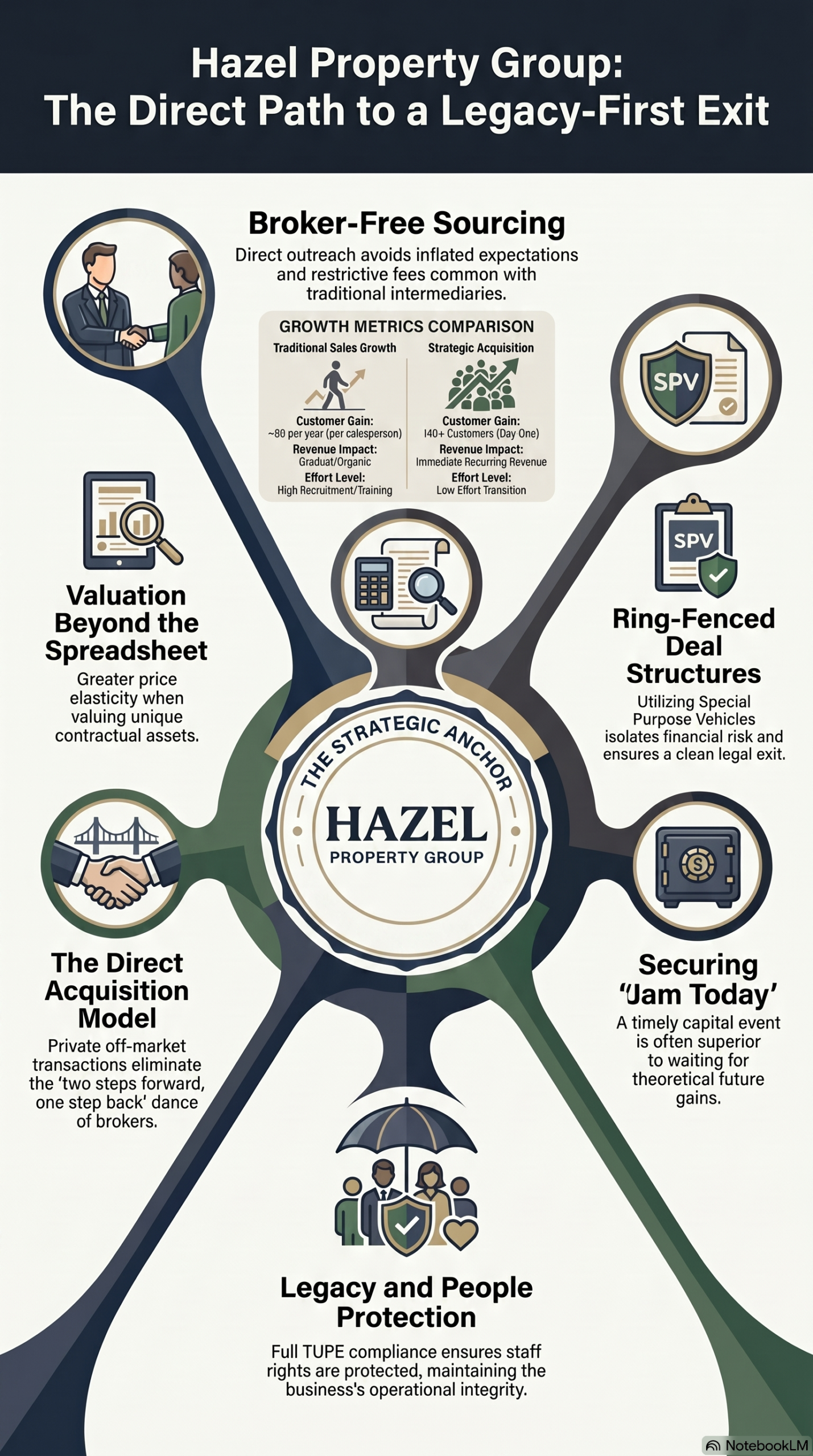
Hazel Property Group is a direct buyer of UK owner-managed businesses. We buy privately, off-market, without brokers or middlemen.
If you’re thinking about selling and want an honest conversation about what a private sale could look like for your business, get in touch.
No obligation. No pressure. Complete confidentiality from the very first call.
Murray@HazelPropertyGroup.co.uk
0330 520 0092
hazelpropertygroup.co.uk