For most business owners, confidentiality is the number one concern when they start thinking about selling.
Not the price. Not the legal process. The people.
What happens if staff find out before the sale is complete? Will they start looking for other jobs? Will key people leave? Will word get to your clients or competitors? Will the whole thing unravel before you even get to completion?
These are legitimate fears. And they’re exactly why managing confidentiality properly is one of the most important things you can do in a business sale.
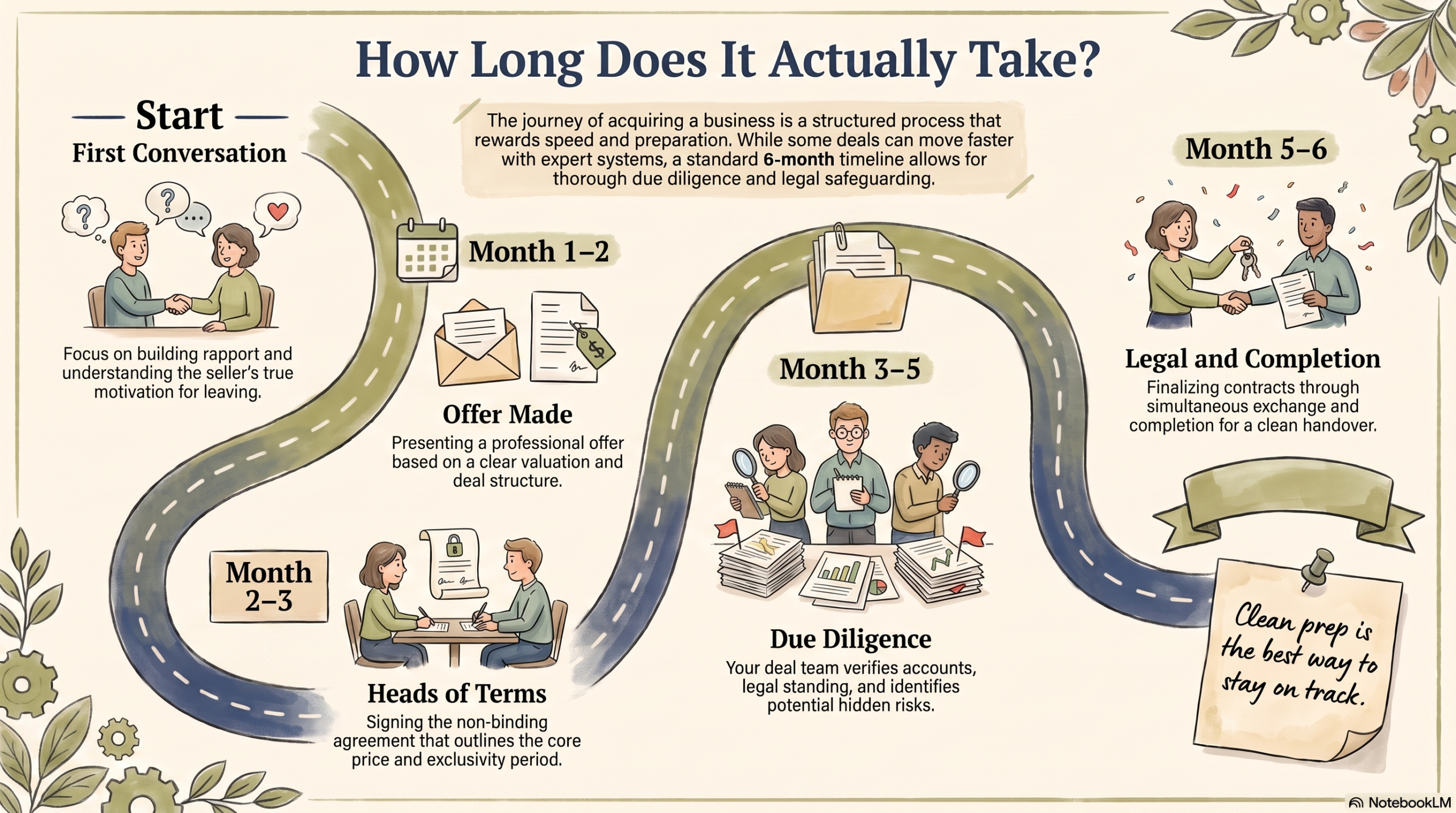
The good news is that keeping a sale confidential for three to five months — the typical timeline from Heads of Terms to completion — is entirely achievable. It just requires the right approach from the start.
Why Confidentiality Matters So Much
When a business sale becomes known before it’s complete, the consequences can be serious.
- Key staff start looking for other jobs — not because the sale is bad news, but because uncertainty makes people nervous
- Clients wonder whether to look elsewhere — particularly if they have a strong personal relationship with the seller
- Competitors use the information to their advantage — approaching your customers or staff directly
- The deal itself can be jeopardised — a buyer who hears that word has got out may get cold feet
None of these things need to happen. But they become much more likely if confidentiality isn’t actively managed throughout the process.
The Biggest Confidentiality Risk: Going Through a Broker
The single biggest threat to confidentiality in a business sale is going to market through a broker.
When you instruct a broker, your business gets listed. It appears on marketplaces. A marketing pack gets created and circulated to their buyer network — which might be dozens or hundreds of people. And in most industries, word travels faster than most sellers expect.
A competitor who is subscribed to a business-for-sale platform will see your business listed. A supplier who knows your accountant might hear something. A buyer who views the listing might mention it to someone who knows someone in your industry.
If confidentiality matters to you — and for most owner-managers it does — think carefully about whether a public listing is the right approach before you instruct a broker.
A private, off-market sale — where a buyer approaches you directly without any public listing or marketing — is the most effective way to protect confidentiality from the very start of the process.
Eight Ways to Protect Confidentiality Throughout a Business Sale
1. Start with a Non Disclosure Agreement
Before any information about your business is shared with a buyer, get a Non Disclosure Agreement — an NDA — signed.
This is standard practice in any professional business sale and any serious buyer will expect it. The NDA legally binds the buyer and their advisors to keep everything they learn about your business confidential — during the process and after it, regardless of whether the deal completes.
Your lawyer drafts this. It should cover the buyer, their accountant, their lawyer, and anyone else involved in the process on their side.
2. Choose a Private Buyer
As above — the type of buyer you choose has the biggest impact on confidentiality. A direct, private buyer who approaches you off-market keeps everything contained. There is no listing, no marketing pack, and no unnecessary exposure.
3. Keep Meetings Offsite
Don’t invite buyers or their advisors into your business premises during the sale process. Meet at a lawyer’s office, a hotel meeting room, or a serviced office space.
Your staff don’t need to see unfamiliar faces coming and going and asking questions. Even well-intentioned curiosity from staff — ‘who was that?’ — can start a rumour.
4. Use a Secure Data Room
All the documents the buyer needs — accounts, contracts, staff information, property details — should go into a secure online data room. Your lawyer sets this up.
This means sensitive documents aren’t being emailed back and forth in a way that could be intercepted or accidentally seen. Everything is controlled, logged, and accessible only to the people who need it.
5. Brief Your Advisors on Confidentiality
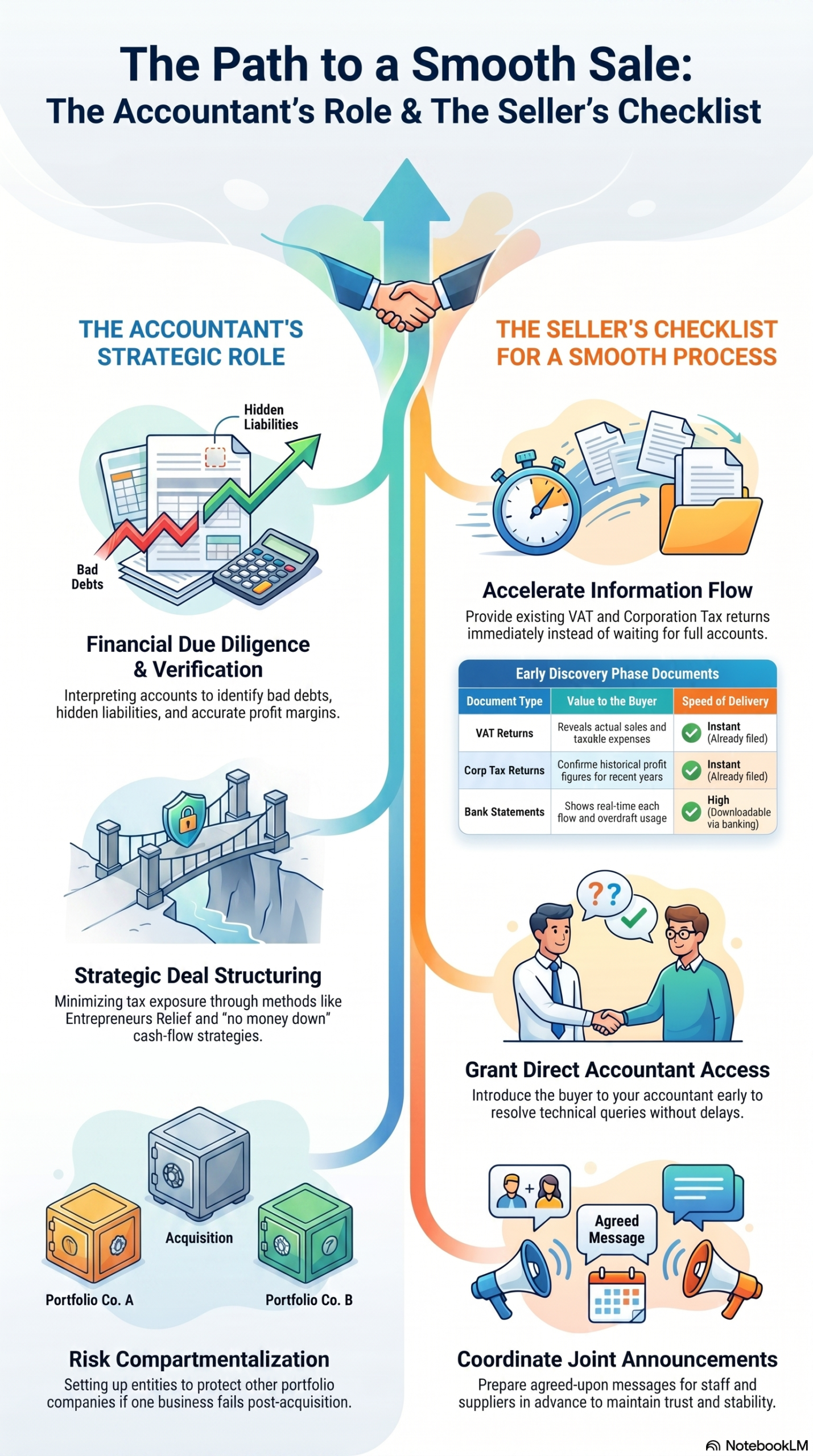
Your lawyer and accountant both need to know that confidentiality is a priority from day one. That means discreet communication, secure document handling, and no casual mentions of the deal outside the process.
Most experienced M&A advisors understand this without being told. But it’s worth making it explicit at the outset.
6. Manage Due Diligence Carefully
The buyer’s team will need access to information about your business during due diligence — including information about your staff, their contracts, and their length of service. Make sure this is managed through your lawyer and accountant rather than directly, and that nothing about the process is visible to your team.
If a buyer needs to visit the premises as part of due diligence, arrange it outside of normal working hours where possible.
7. Plan the Announcement in Advance
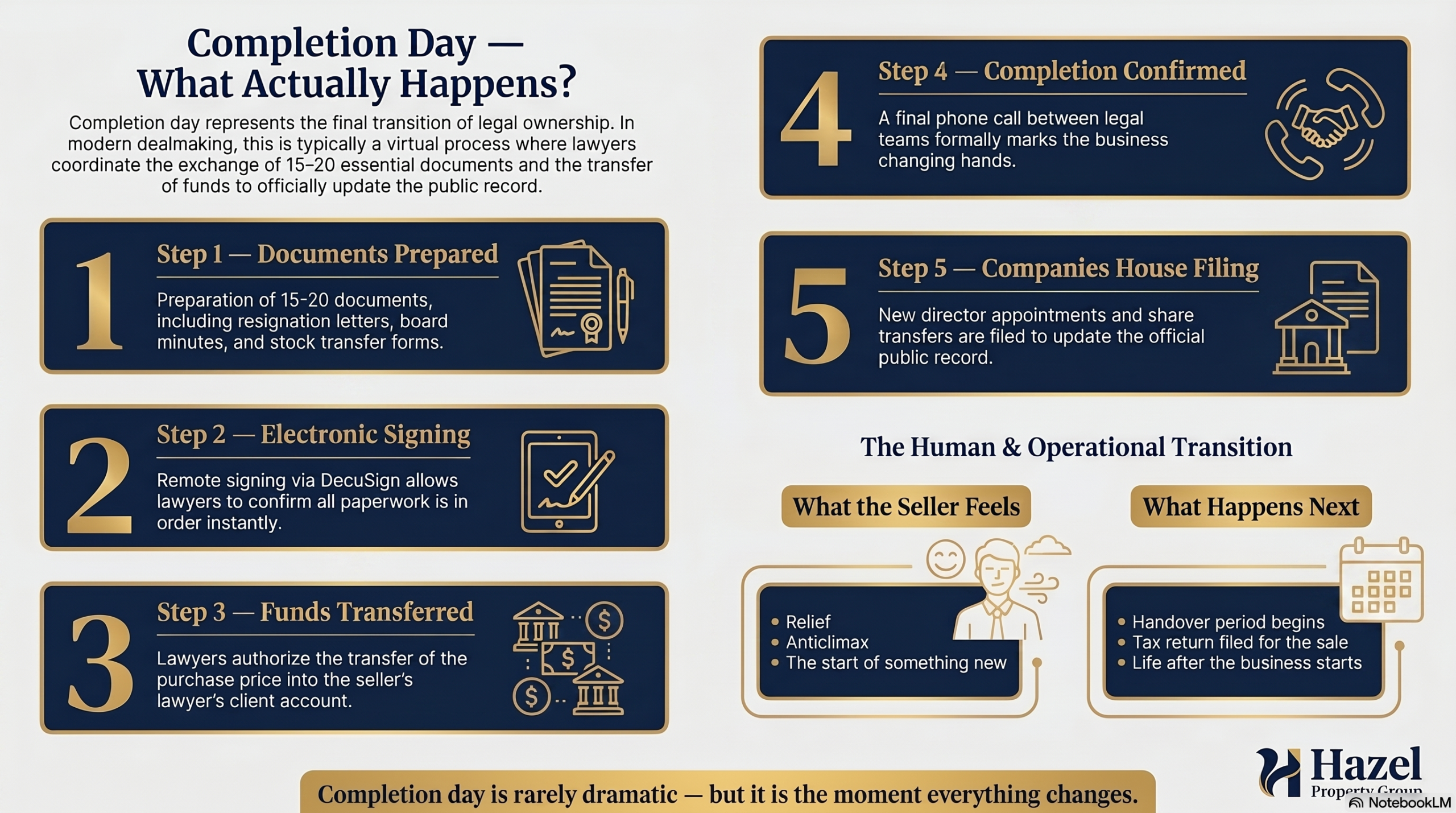
The announcement to staff should happen on completion day or immediately after. Not before.
But the planning for that announcement should happen well in advance. Agree with the buyer exactly what will be said, who will say it, and in what order. Your most senior people should hear it first — ideally in a one-to-one conversation before the wider team announcement.
Think about the questions your staff will ask:
- Are my job safe?
- Will my contract change?
- Will the business still operate from the same location?
- What does the new owner plan to do?
Have honest, prepared answers ready for all of these. A calm, confident announcement that addresses the obvious concerns head-on builds trust on both sides.
8. Know What to Do if Someone Finds Out Early
It does occasionally happen. Someone notices something. A question gets asked. A document is spotted.
If that happens — don’t panic and don’t lie. A calm, honest response along the lines of ‘I’m always looking at ways to develop the business and I’ll keep you informed of anything relevant’ buys time without deceiving anyone.
If a key member of staff comes to you directly and asks outright — use your judgment. In some cases, bringing a trusted person into the picture early — under their own NDA — can actually help rather than hinder the process.
What a Well-Managed Confidential Sale Looks Like
A seller who manages confidentiality well throughout a business sale will typically:
- Have chosen a private buyer rather than going to market publicly
- Had an NDA signed before any information was shared
- Conducted all meetings offsite
- Used a secure data room for all document sharing
- Briefed their lawyer and accountant on discretion from day one
- Planned the staff announcement in detail before completion
- Delivered that announcement calmly and confidently on completion day
The result is a sale process that completes without unnecessary disruption — and a team that hears about the change of ownership from their employer directly, clearly, and in a way that builds confidence rather than creating anxiety.
The sellers who handle this best are the ones who treat confidentiality as a professional responsibility rather than an awkward secret. It’s not about hiding something. It’s about protecting everyone involved until the right moment.
The Emotional Side
It’s worth acknowledging that keeping a sale confidential from a team you’ve built and care about can feel uncomfortable. Some sellers describe a sense of guilt — a feeling that they’re being dishonest with people who trust them.
It’s a natural feeling. But it’s worth reframing it.
Telling staff about a potential sale before it’s confirmed doesn’t protect them. It creates uncertainty, anxiety, and speculation — often for months — about something that may or may not happen. If the deal falls through, you’ve put your team through unnecessary stress for nothing.
Telling them on completion day — when the deal is done, the facts are clear, and you can answer their questions honestly — is actually the kinder approach. You’re giving them certainty, not uncertainty.
Final Thoughts
Keeping a sale confidential is not only possible — it’s the norm in a well-run private business sale. The process has been designed with confidentiality in mind at every stage.
The key decisions are made at the beginning. Choose the right type of buyer. Get the NDA in place. Brief your advisors properly. And plan the announcement well in advance of the day it needs to happen.
Do those things and the confidentiality piece takes care of itself.
At Hazel Property Group, every conversation we have with a business owner is completely private and confidential — from the very first call. If you’d like to understand what a private, off-market sale could look like for your business, get in touch at hazelpropertygroup.co.uk.
Further Reading
If you found this guide useful you might also want to read:
- What Happens to Your Staff When You Sell Your Business?
- What Actually Happens When You Sell Your Business? A Step-by-Step Guide
- How Long Does It Take to Sell a Business?
- Completion Day: What Actually Happens?
Or watch the full Process Series on the Hazel Property Group YouTube channel.
Search Hazel Property Group on YouTube or visit hazelpropertygroup.co.uk